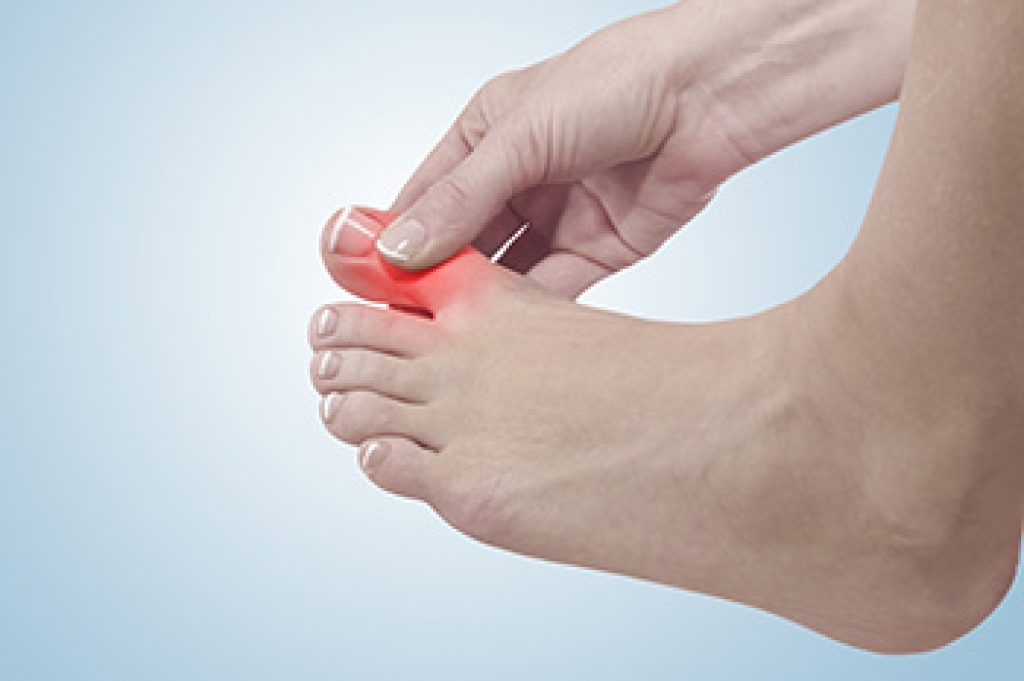
Arthritis of the big toe joint can make walking painful and limit daily activity. This condition develops when the cartilage that cushions the joint wears down over time. As the joint becomes stiff and inflamed, patients may notice swelling, reduced motion, and discomfort when pushing off the foot. Many people find relief through non-surgical treatment options. Wearing supportive shoes with a stiff sole can reduce strain on the joint. Custom orthotics help control motion and improve alignment during walking. Anti-inflammatory medications may decrease pain and swelling. In some cases, corticosteroid injections provide temporary relief. Targeted exercises can improve flexibility and strengthen surrounding muscles, which supports better joint function. Early care often slows progression and improves comfort. Ignoring symptoms may lead to worsening stiffness and limited mobility. If you are experiencing ongoing pain or reduced movement in your big toe joint, it is suggested that you see a podiatrist for a proper diagnosis and appropriate treatment.
Arthritis can be a difficult condition to live with. If you are seeking treatment, contact Sharmila Das-Wattley, DPM from Home Wound Healing. Our doctor can provide the care you need to keep you pain-free and on your feet.
Arthritic Foot Care
Arthritis is a term that is commonly used to describe joint pain. The condition itself can occur to anyone of any age, race, or gender, and there are over 100 types of it. Nevertheless, arthritis is more commonly found in women compared to men, and it is also more prevalent in those who are overweight. The causes of arthritis vary depending on which type of arthritis you have. Osteoarthritis for example, is often caused by injury, while rheumatoid arthritis is caused by a misdirected immune system.
Symptoms
- Swelling
- Pain
- Stiffness
- Decreased Range of Motion
Arthritic symptoms range in severity, and they may come and go. Some symptoms stay the same for several years but could potentially get worse with time. Severe cases of arthritis can prevent its sufferers from performing daily activities and make walking difficult.
Risk Factors
- Occupation – Occupations requiring repetitive knee movements have been linked to osteoarthritis
- Obesity – Excess weight can contribute to osteoarthritis development
- Infection – Microbial agents can infect the joints and trigger arthritis
- Joint Injuries – Damage to joints may lead to osteoarthritis
- Age – Risk increases with age
- Gender –Most types are more common in women
- Genetics – Arthritis can be hereditary
If you suspect your arthritis is affecting your feet, it is crucial that you see a podiatrist immediately. Your doctor will be able to address your specific case and help you decide which treatment method is best for you.
If you have any questions please feel free to contact our office located in Florida . We offer the newest diagnostic tools and technology to treat your foot and ankle needs.
